

ENG (traducción al español debajo / Spanish translation below)
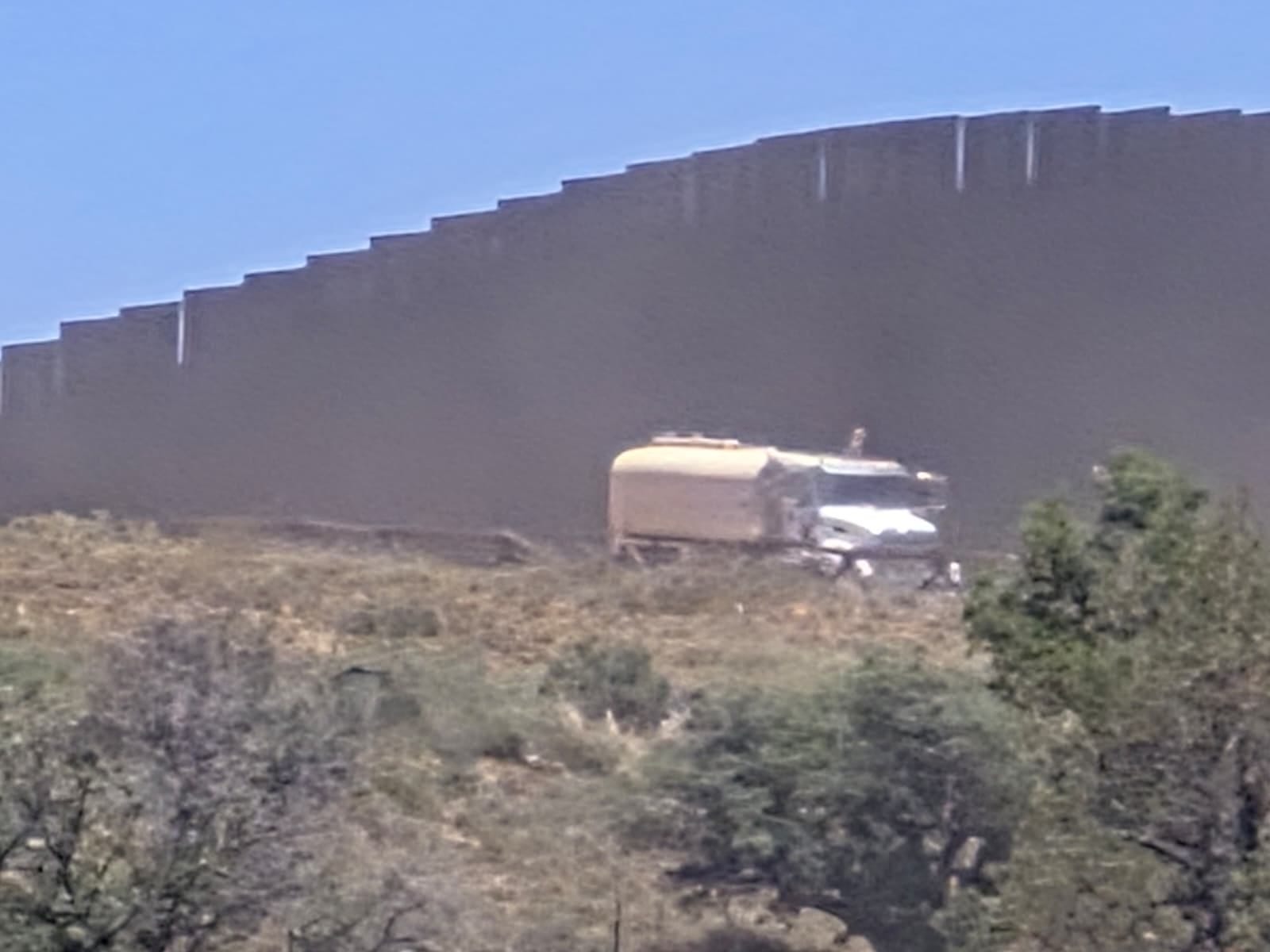
Earlier this summer, a friend and I got lost in the beautiful and remote San Rafael Valley on our way to a happening in Lochiel, Arizona. We took a wrong turn off a dirt road and went on a road that washed out about a quarter mile from the border. We heard the driving of machinery and walked down a wash and over a hill to where our government is spending millions of dollars to wall off a 24-mile section of one of the last migratory corridors for animals along the Arizona/Sonoran border—not with just one wall, but two.


We are at historic lows in human migration between ports of entry, but even when we were at all-time highs, this corridor was very rarely, if ever, transited by humans because of its remoteness and lack of transportation infrastructure on the south side.
Our spending billions of dollars ($46 billion passed in the One Big “Beautiful” Bill), extracting resources, irrevocably scarring the earth, destroying sacred sites of the indigenous, pumping precious water to make cement and to keep dust down on roads we built (providing infrastructure that will be used not only by border patrol but also potentially smuggling organizations) is IMMORAL and a sin against God, Creation, and humanity.
Communities across the border are rising up in protest of this reckless and destructive spending that is not only wasting natural resources and harming fragile eco-systems but also increasing the national debt.
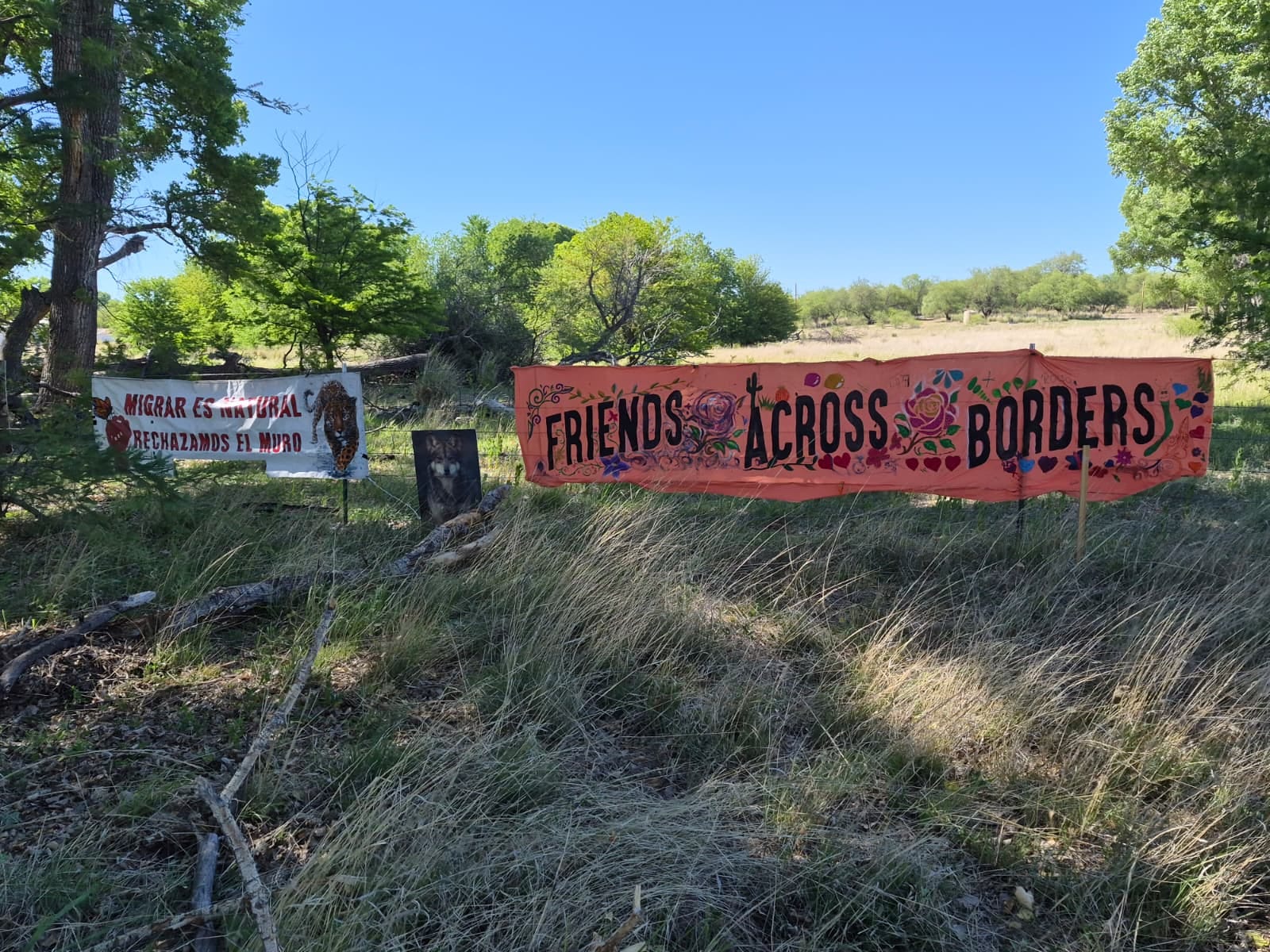
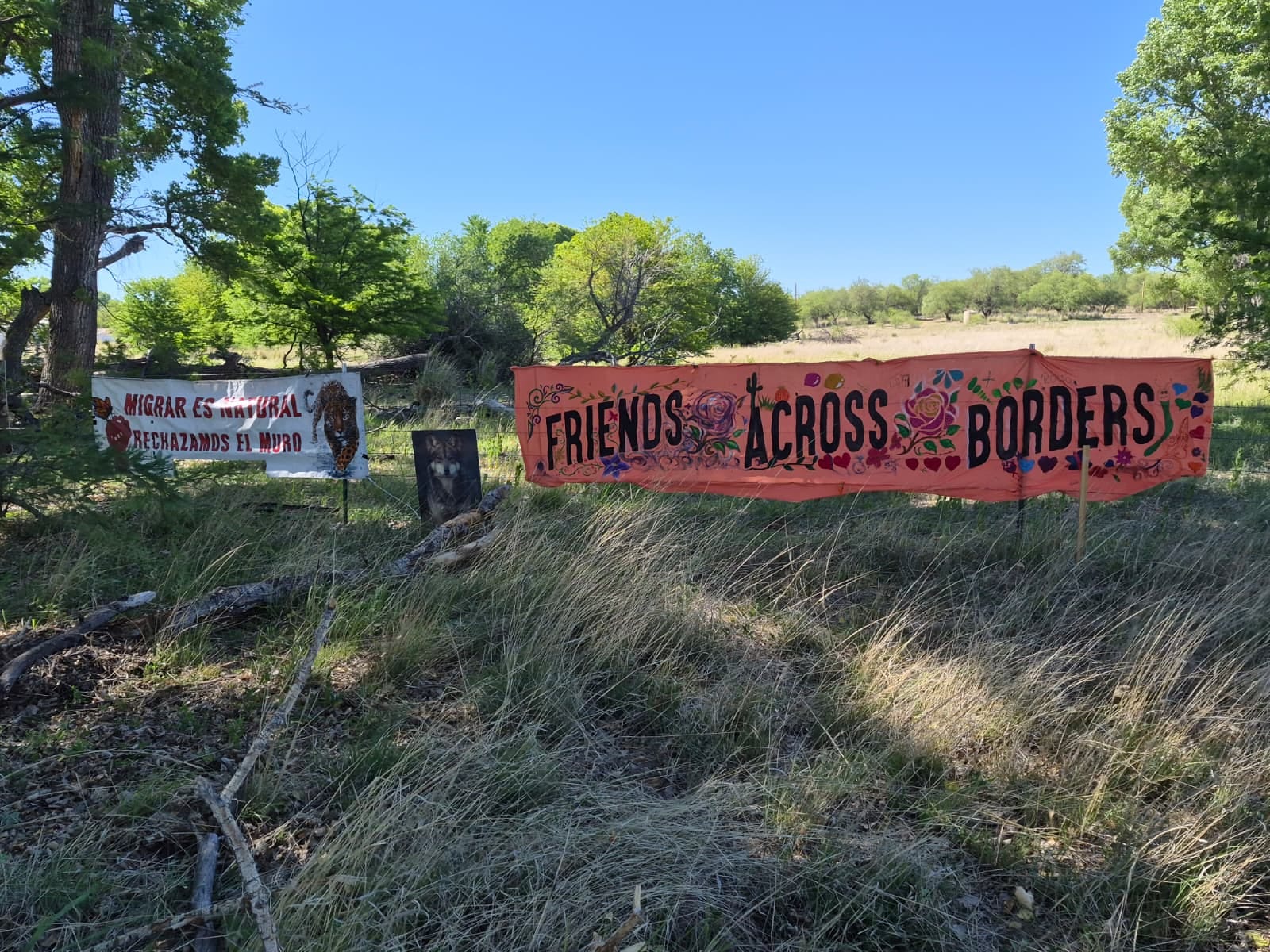
Join us in giving thanks to God for the folks who have been camping out in Lochiel for the last few months to resist this waste, fraud, and abuse by our government. They gather each morning for prayer. They are taking turns sitting in a 200-year-old cottonwood tree, the last in a grove slated for destruction. Friends in Mexico are sitting in a cottonwood in Mexico, and together they have strung a sign over the border stating, “Resistance is Fertile.”
Together with the Tohono O’odham peoples, the communities near Big Bend National Park, and other communities, they continue to mobilize and resist this senseless destruction of God’s creation.
The building of walls dividing our communities is not new, nor is the resistance to them. When delegations visit with us, we always gather on the north side of the part of creation that is now known as the US/Mexico border. We ask the question: “How have we as a nation defined this part of God’s creation?”


Where Douglas and Agua Prieta (AP) meet, we can see the efforts of five presidential administrations to divide our community as a continuation of the Clinton administration’s “prevention through deterrence strategy” that sought to cut off populated areas to unauthorized migration and use deserts and mountains as lethal deterrents to migration.
There are cameras on poles from the Clinton administration; a secondary pedestrian barrier from the Bush administration; an 18-foot steel bollard barrier from the Obama administration (which had replaced the original barriers from the Clinton administration); coils of sharp concertina (razor) wire from the Trump administration; and the secondary vehicle barrier from the Biden administration.
A key difference between the previous administrations and the Trump administration is that the previous administrations thought that building a wall in remote areas was fiscally irresponsible and strategically unnecessary.
Who benefits from this scandalous use of our taxpayer funds?
Before delegations end their visit to Frontera de Cristo, we walk along the south side of the border and ask a question similar to the one we just asked 1 meter north: “How has the community here in AP defined this part of God’s creation?”
The community in AP has created walking paths with exercise equipment; they have planted trees; they’ve built parks and a library. They have transformed a place defined by their neighboring government as a place of exclusion, to a place of recreation, learning, and encounter.


The community in AP has also taken the steel bollard wall that they neither wanted nor paid for and turned it into a canvas. For the last 10 years, dozens of muralists have turned rusty steel designed for exclusion into an array of color and alternative meanings. The first mural was of the iconic monarch butterflies that have migrated over what is now the US/Mexico border long before there was a US or a Mexico. Other murals include geese, whales, and wild horses, creations of God that migrate naturally, painted on walls that are unnatural and, in the long view of the universe, ephemeral, even though sometimes we allow ourselves to accept them as part of the natural order.
In the early 2000s, my colleague Chuy Gallegos and I were leading a time of biblical reflection and prayer at the border wall with a group of older adults from a church in Sun City, Arizona. My colleague Chuy said “We might not be able to tear down these physical walls, but we can tear down the walls that are in our hearts and minds.”
One of the participants immediately raised her hand and defiantly said: “That’s what we used to say about the Berlin Wall.”
While resistance is fertile, it is never easy or immediate, and that is what empires throughout the generations have counted on. The seeds of resistance sometimes have to germinate much longer than we want.
May God give us wisdom and courage to resist all dividing walls of hostility and exclusion and to work for the day where they get turned on their sides and transformed into tables of encounter and reconciliation.
ESP
A principios de este verano, un amigo y yo nos perdimos en el hermoso y remoto Valle de San Rafael mientras nos dirigíamos a un evento en Lochiel, Arizona. Tomamos un camino equivocado al salir de un camino de terracería y seguimos por una ruta que estaba intransitable aproximadamente a un cuarto de milla de la frontera.
Escuchamos el ruido de maquinaria y caminamos por un arroyo seco y sobre una colina, hasta llegar a un lugar donde nuestro gobierno está gastando millones de dólares para cercar con un muro un tramo de 24 millas de uno de los últimos corredores migratorios para animales a lo largo de la frontera entre Arizona y Sonora; y no con un solo muro, sino con dos.


Actualmente, nos encontramos en niveles históricamente bajos de migración humana entre los puertos de entrada. Sin embargo, incluso cuando alcanzamos niveles máximos históricos, este corredor rara vez, si es que alguna vez, era transitado por personas debido a su ubicación remota y a la falta de infraestructura de transporte en el lado sur.
Nuestro gasto de miles de millones de dólares (46 mil millones de dólares aprobados en la llamada ley “One Big Beautiful Bill”), la extracción de recursos, las cicatrices irreversibles que estamos dejando en la tierra, la destrucción de sitios sagrados de los pueblos indígenas, el bombeo de agua preciosa para fabricar cemento y mantener el polvo bajo control en los caminos que construimos (proporcionando infraestructura que será utilizada no solo por la Patrulla Fronteriza, sino también potencialmente por organizaciones de tráfico y contrabando) es INMORAL y un pecado contra Dios, la Creación y la humanidad.
Las comunidades a lo largo de la frontera se están levantando en protesta contra este gasto irresponsable y destructivo, que no solo está desperdiciando los recursos naturales y dañando ecosistemas frágiles, sino que también está aumentando la deuda nacional.
Únete a nosotros para dar gracias a Dios por las personas que han estado acampando en Lochiel durante los últimos meses para resistir este desperdicio, fraude y abuso por parte de nuestro gobierno. Cada mañana se reúnen para orar. Se turnan para sentarse en un sauce de 200 años de antigüedad, el último árbol de una arboleda que está destinada a ser destruida. Amigos en México están sentados en un sauce del lado mexicano y, juntos, han colocado un letrero sobre la frontera que dice: “La resistencia da frutos.”
Junto con los pueblos Tohono O’odham, las comunidades cercanas al Parque Nacional Big Bend y otras comunidades, continúan movilizándose y resistiendo esta destrucción sin sentido de la creación de Dios.
La construcción de muros que dividen nuestras comunidades no es algo nuevo, como tampoco lo es la resistencia a ellos. Cuando las delegaciones nos visitan, siempre nos reunimos en el lado norte de la parte de la creación que ahora conocemos como la frontera entre Estados Unidos y México. Nos hacemos la pregunta: “¿Cómo hemos definido, como nación, esta parte de la creación de Dios?”


Donde Douglas y Agua Prieta (AP) se encuentran, podemos ver los esfuerzos de cinco administraciones presidenciales por dividir nuestra comunidad, como una continuación de la estrategia de “prevención mediante la disuasión” de la administración Clinton, que buscaba bloquear las zonas pobladas para impedir la migración no autorizada y utilizar los desiertos y las montañas como elementos letales de disuasión para la migración.
Hay cámaras instaladas en postes desde la administración Clinton; una barrera peatonal secundaria de la administración Bush; una barrera de postes de acero de 18 pies de altura de la administración Obama (que había reemplazado las barreras originales de la administración Clinton); rollos de alambre de concertina afilado (alambre de púas tipo navaja) de la administración Trump; y la barrera vehicular secundaria de la administración Biden.
Una diferencia clave entre las administraciones anteriores y la administración Trump es que las administraciones anteriores consideraban que construir un muro en zonas remotas era fiscalmente irresponsable y estratégicamente innecesario.
¿Quién se beneficia de este escandaloso uso de los fondos de los contribuyentes?
Antes de que las delegaciones concluyan su visita a Frontera de Cristo, caminamos por el lado sur de la frontera y hacemos una pregunta similar a la que acabamos de plantear un metro al norte: “¿Cómo ha definido la comunidad aquí en AP esta parte de la creación de Dios?”
La comunidad de AP ha creado senderos para caminar con equipos para hacer ejercicio; ha plantado árboles; ha construido parques y una biblioteca. Han transformado un lugar definido por el gobierno vecino como un espacio de exclusión, en un lugar de recreación, aprendizaje y encuentro.


La comunidad de AP también ha tomado el muro de postes de acero que nunca quiso ni pagó y lo ha convertido en un lienzo. Durante los últimos 10 años, decenas de muralistas han transformado el acero oxidado, diseñado para la exclusión, en un despliegue de color y significados alternativos.
El primer mural hecho representa a las emblemáticas mariposas monarca, que han migrado sobre lo que hoy conocemos como la frontera entre Estados Unidos y México desde mucho antes de que existieran Estados Unidos o México.
Otros murales incluyen gansos, ballenas y caballos salvajes: creaciones de Dios que migran de manera natural, pintadas sobre muros que son antinaturales y que, desde la perspectiva del largo transcurso del universo, son efímeros, aunque a veces nos permitimos aceptarlos como parte del orden natural.
A principios de la década de 2000, mi colega Chuy Gallegos y yo dirigíamos un momento de reflexión bíblica y oración junto al muro fronterizo con un grupo de adultos mayores de una iglesia en Sun City, Arizona. Mi colega Chuy dijo: “Puede que no seamos capaces de derribar estos muros físicos, pero sí podemos derribar los muros que existen en nuestros corazones y nuestras mentes.”
Una de las participantes levantó inmediatamente la mano y dijo con determinación: “Eso es lo que solíamos decir sobre el Muro de Berlín.”
Aunque la resistencia da frutos, nunca es fácil ni inmediata, y eso es precisamente con lo que los imperios, a lo largo de las generaciones, han contado. Las semillas de la resistencia a veces tienen que germinar durante mucho más tiempo del que quisiéramos.
Que Dios nos dé sabiduría y valor para resistir todos los muros de hostilidad y exclusión que nos dividen, y para trabajar por el día en que estos sean colocados de lado y transformados en mesas de encuentro y reconciliación.